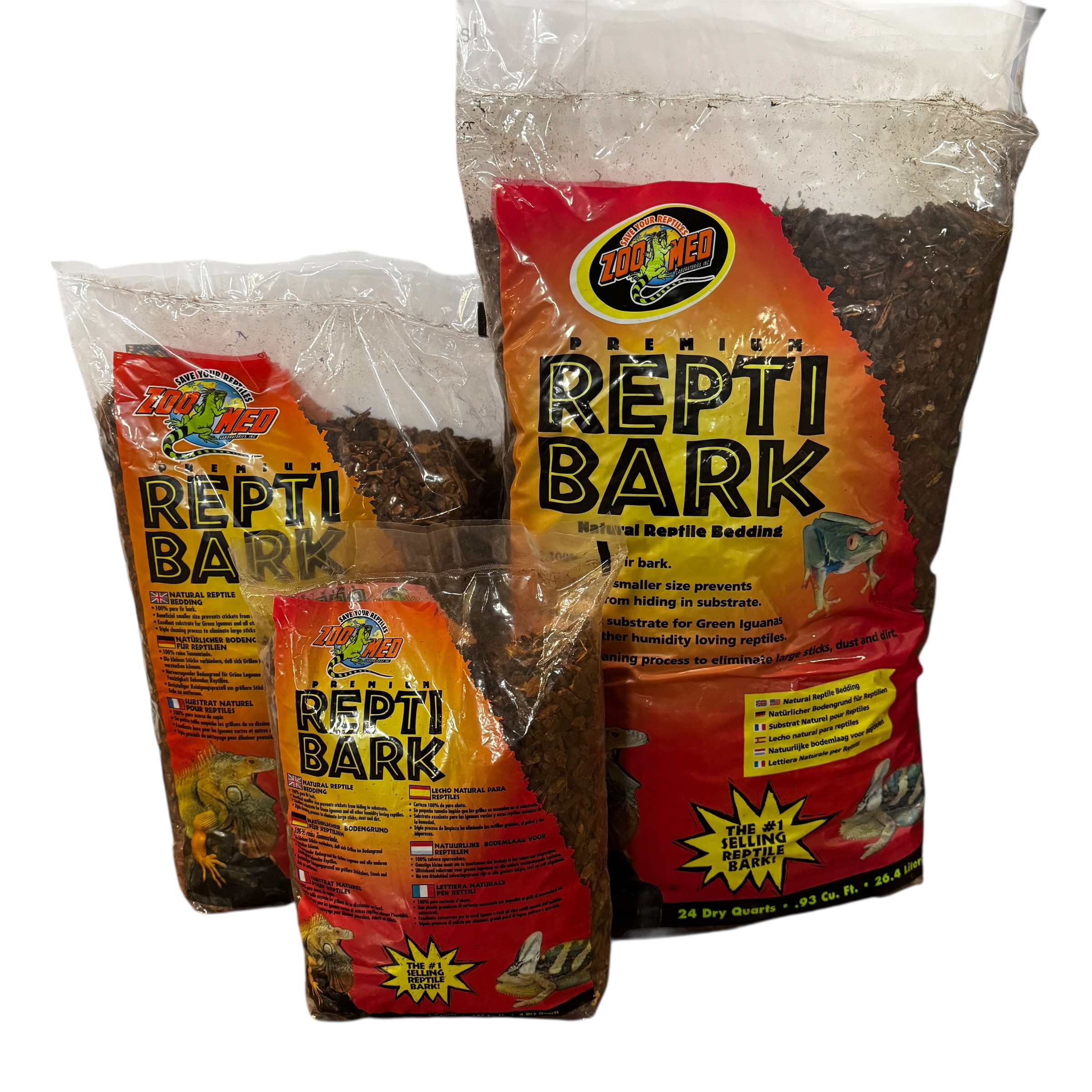
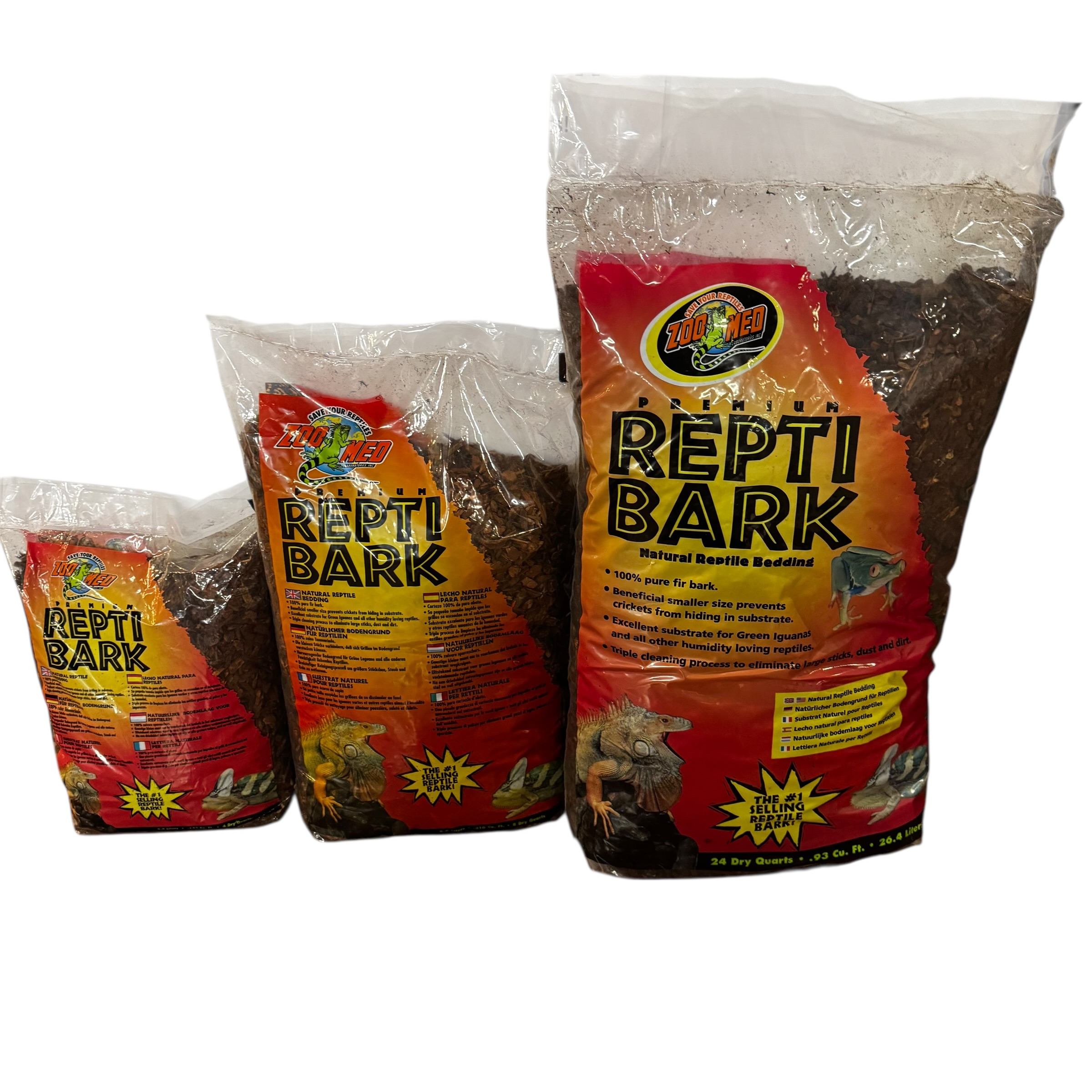
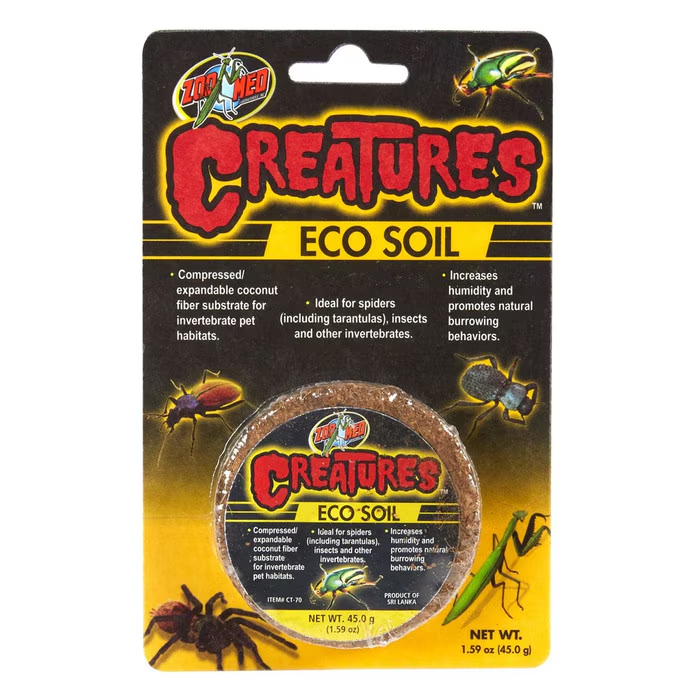
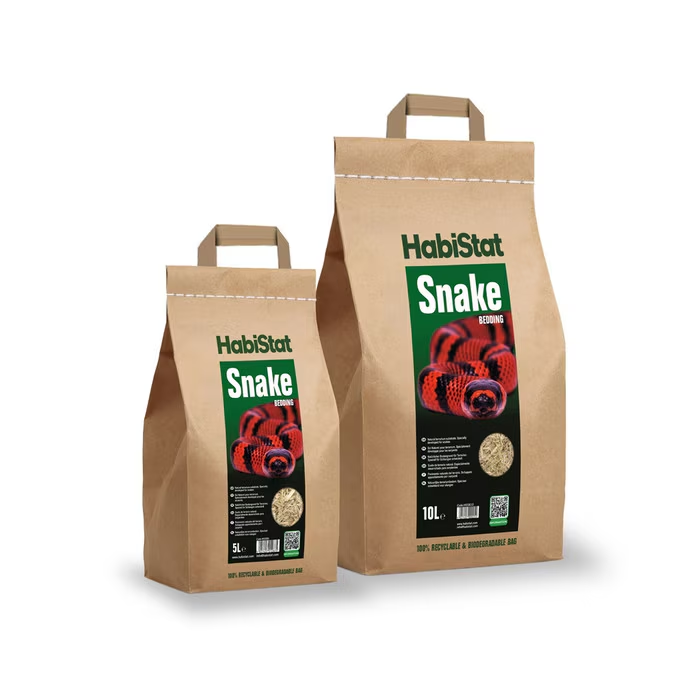
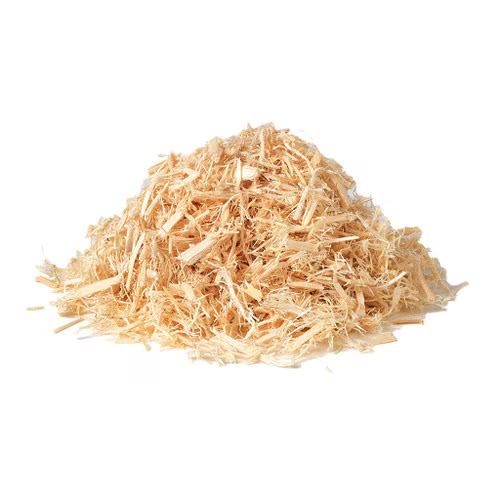
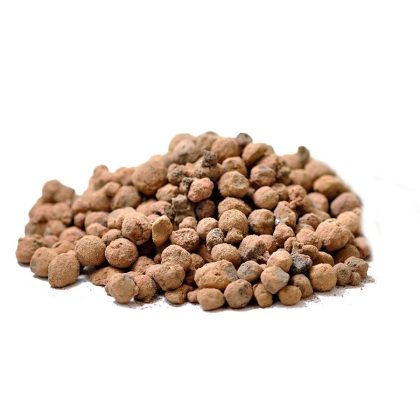
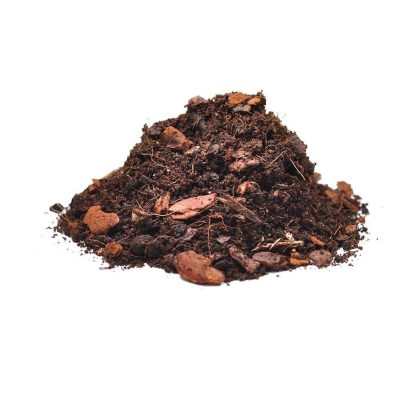
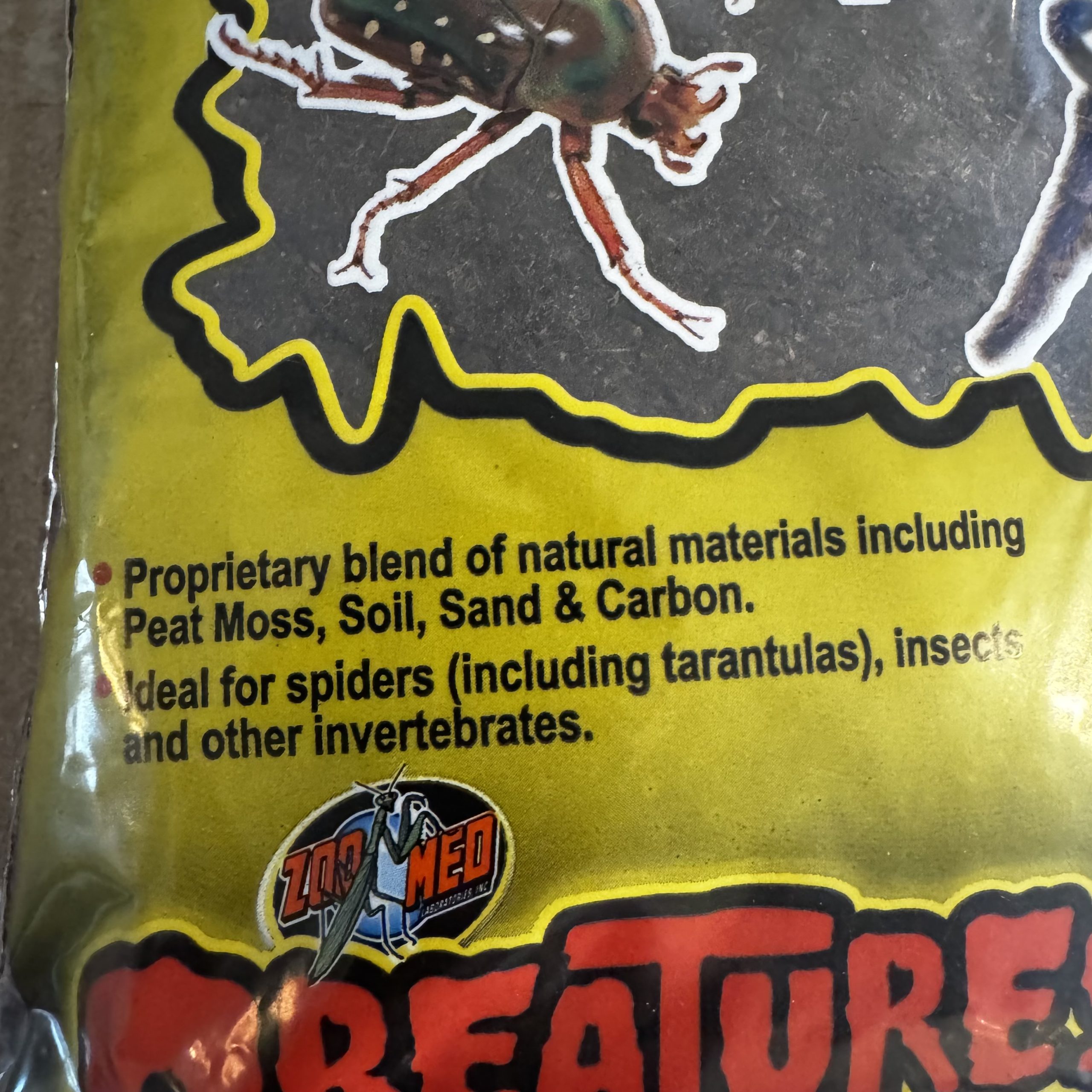
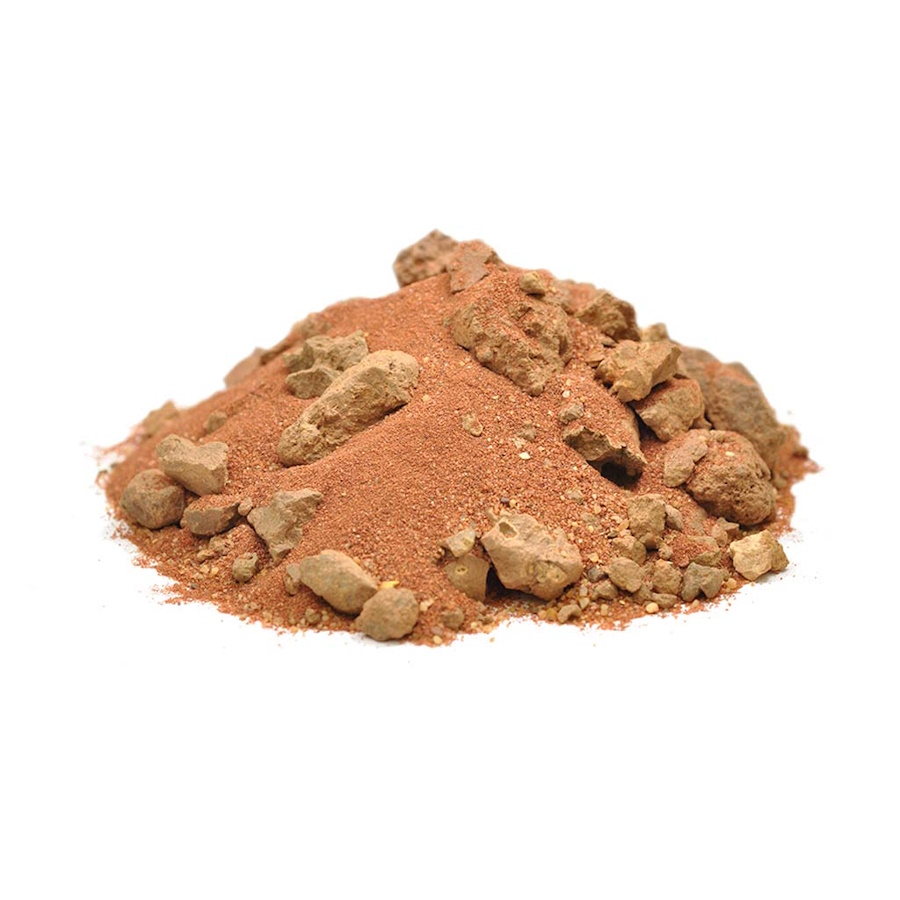
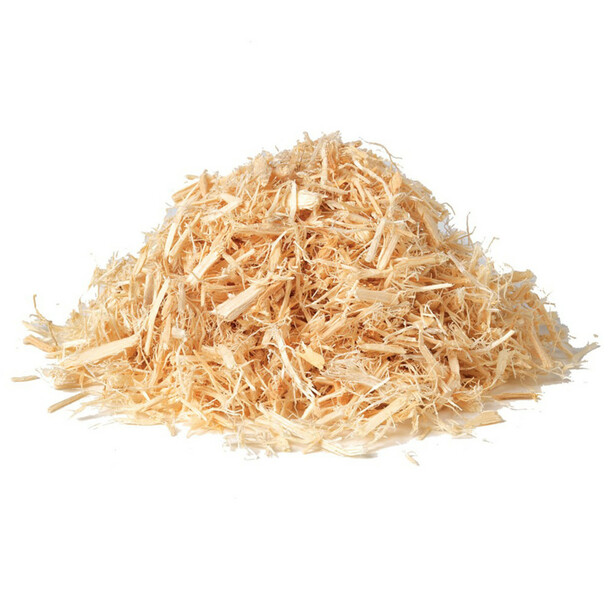
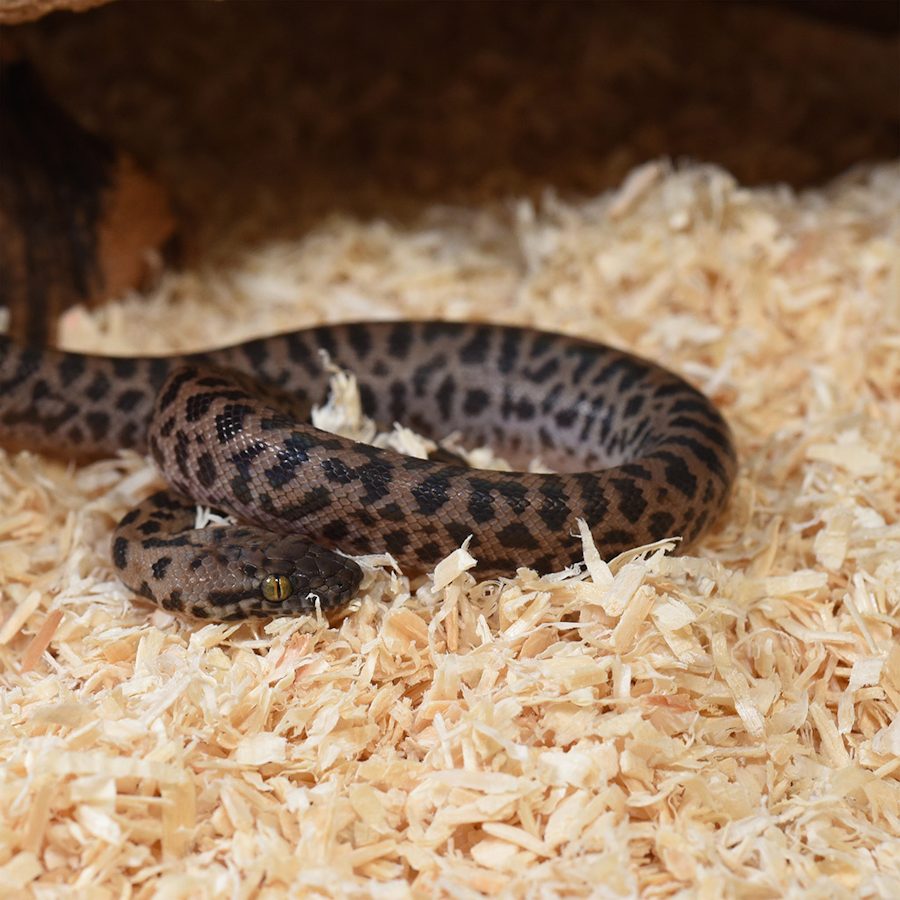
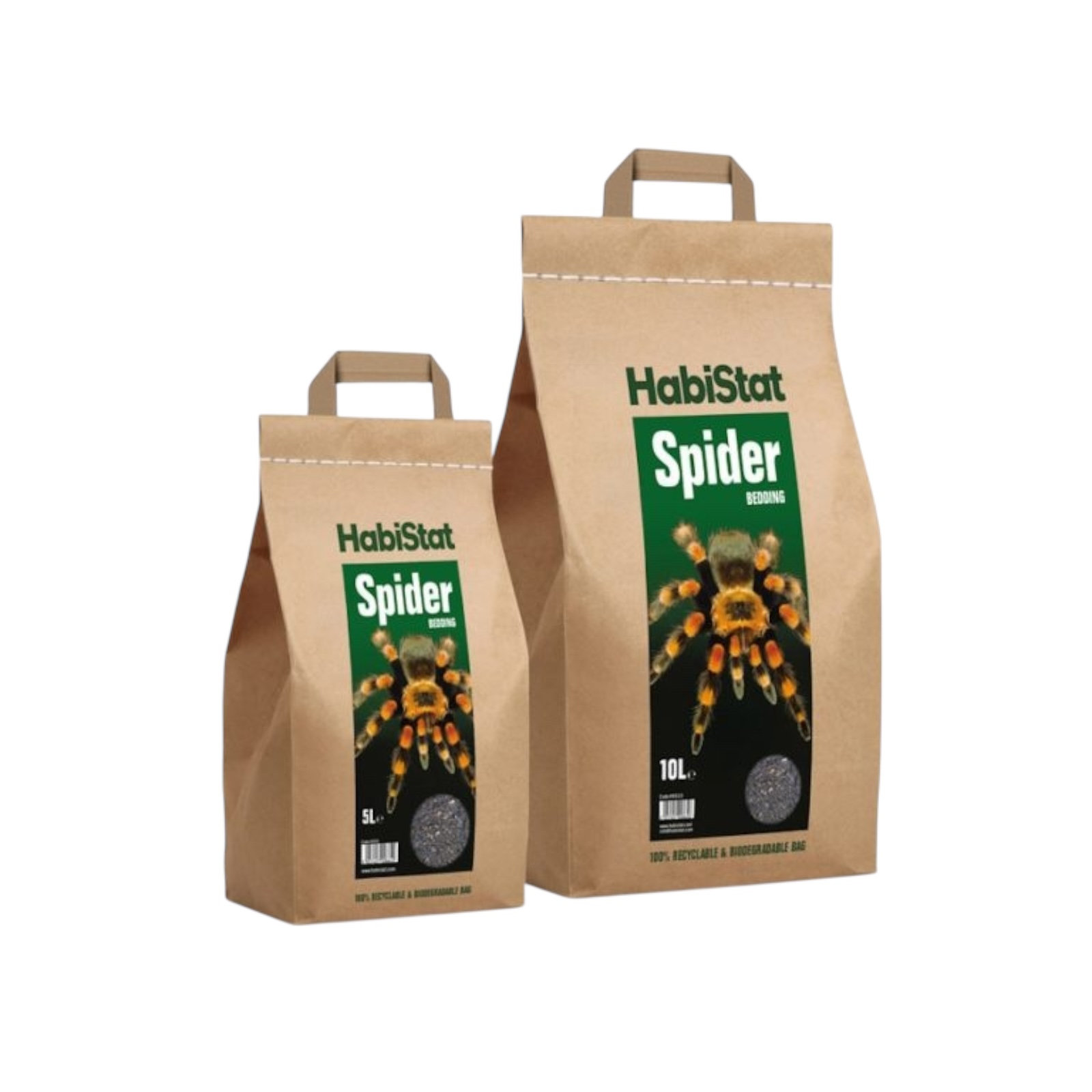
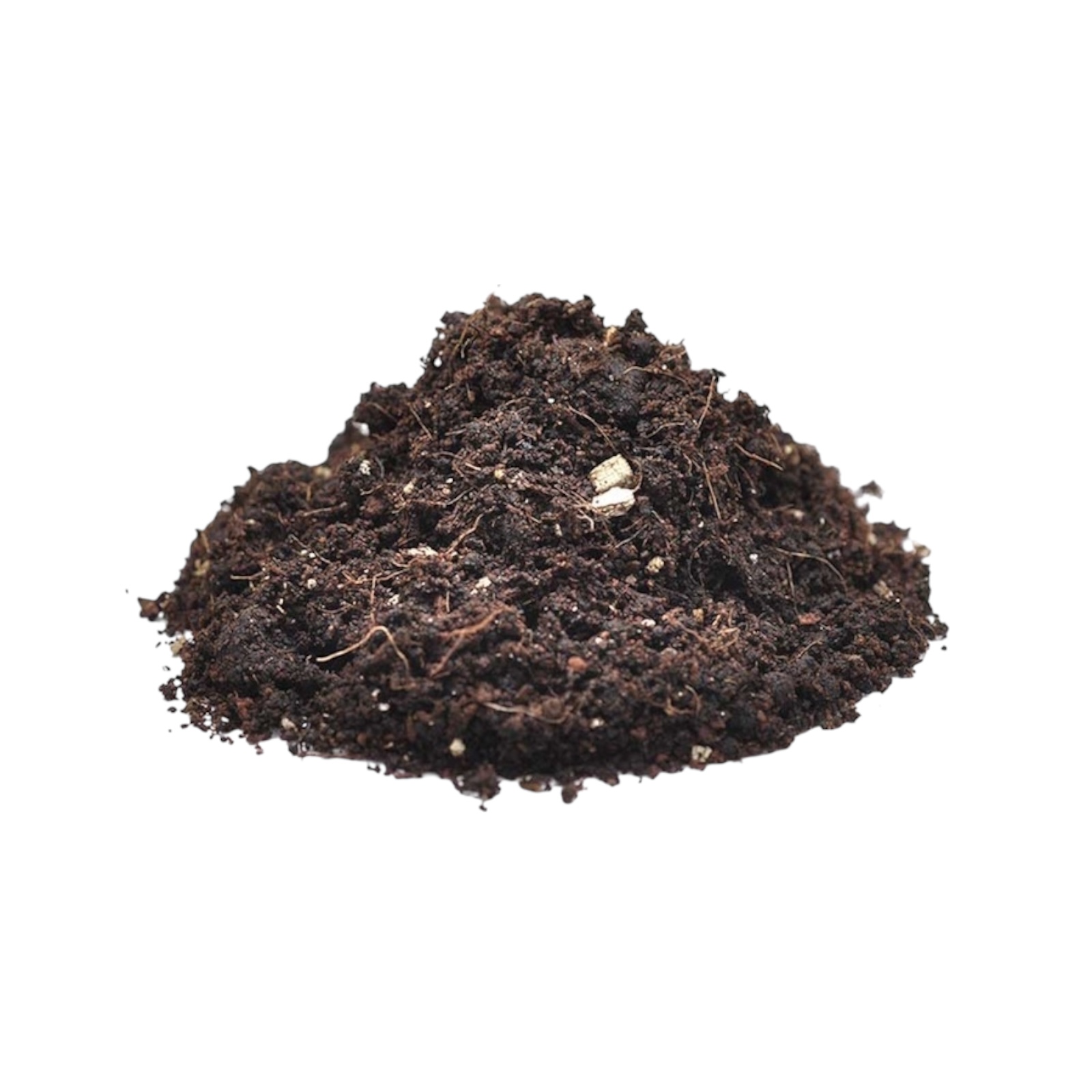
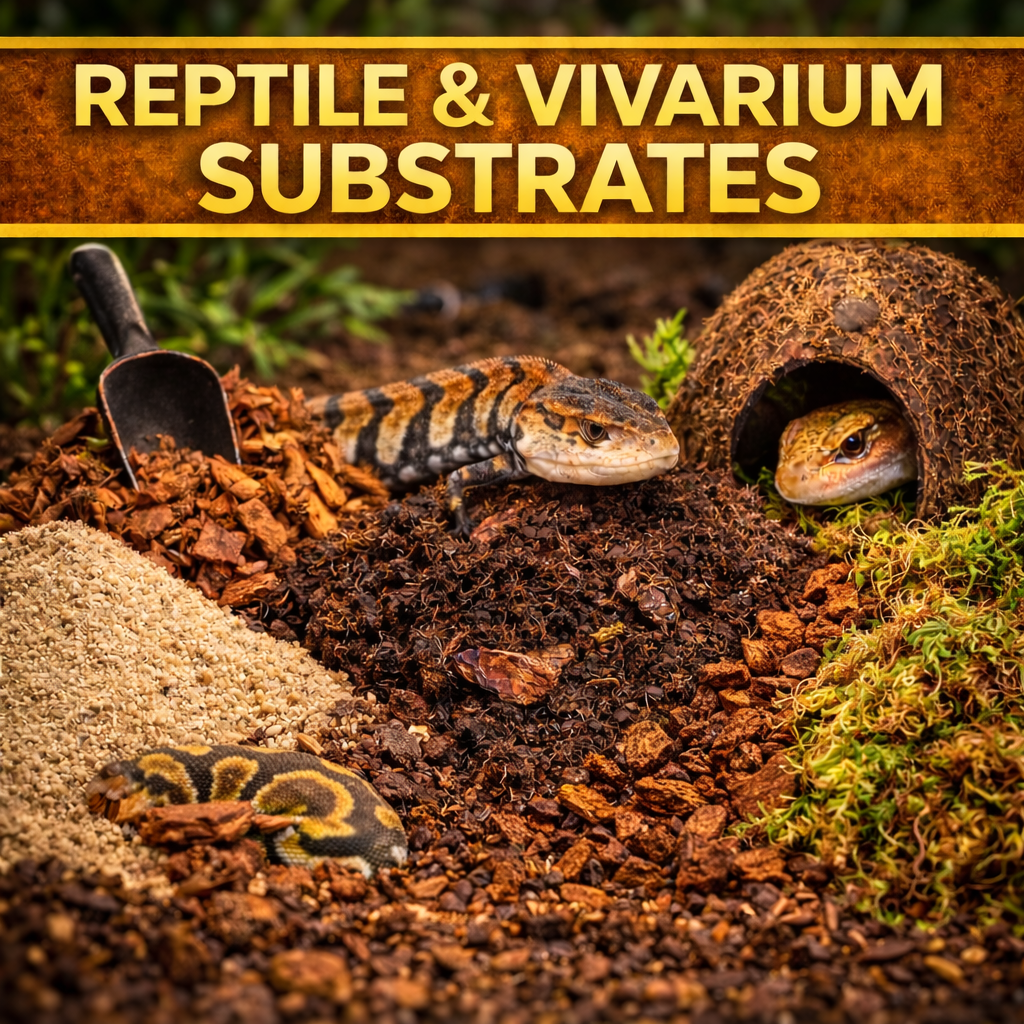
When setting up an enclosure for reptiles, amphibians, or invertebrates it is important to carefully consider the substrate used. Substrate can have a significant impact on enclosure humidity, surface temperature, maintenance requirements, and even the natural behaviour of the animal.
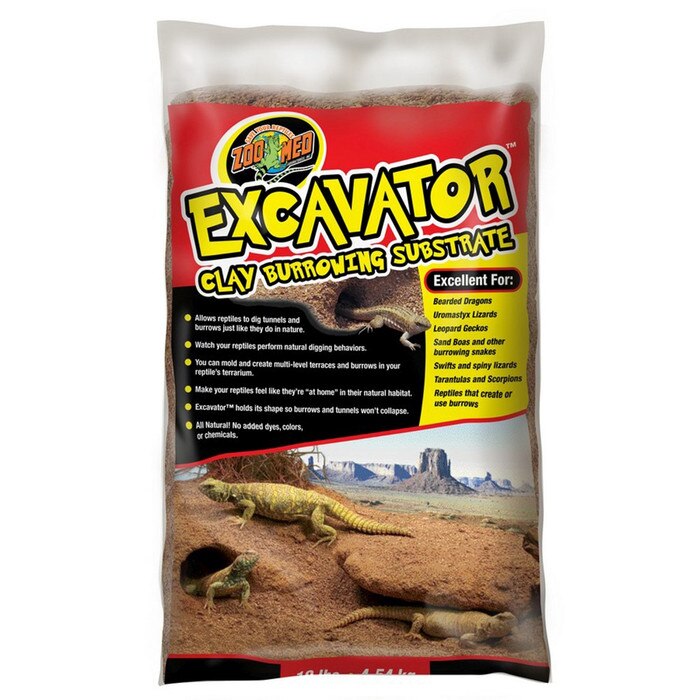
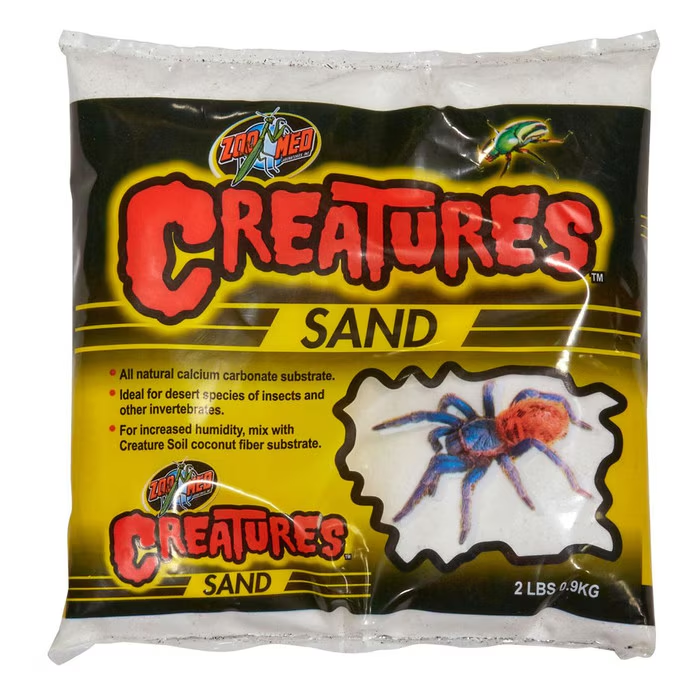
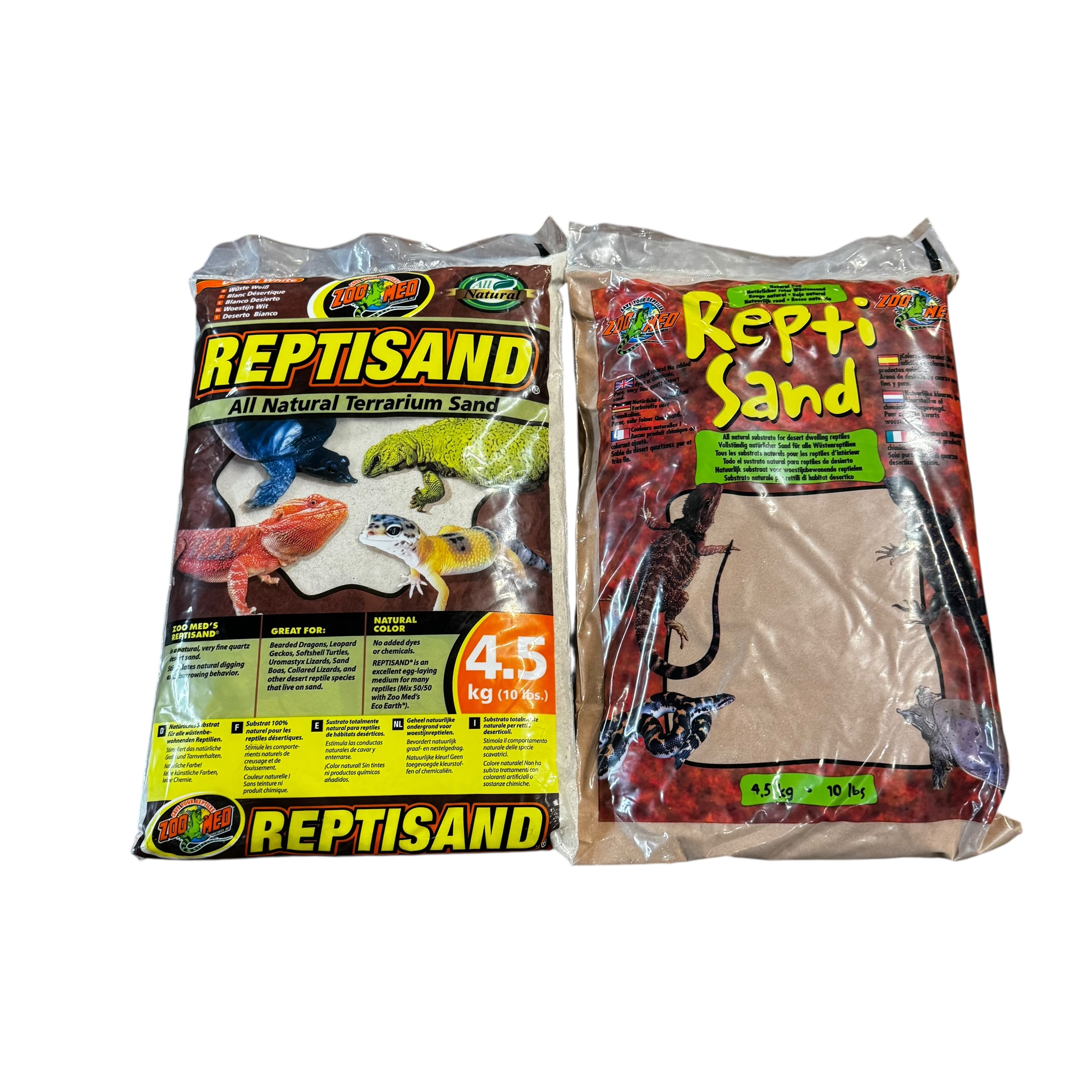
Particulate substrates encourage digging, burrowing, and other natural behaviours that act as important enrichment for many species. Soil and coco-based substrates help to increase humidity within the enclosure, while sand-based substrates are often better suited to arid species that prefer drier environments.
Paper substrates, such as honeycomb liners and other paper bedding products, are ideal for
quarantine setups and sterile environments where hygiene and
easy cleaning are important. These substrates are quick to replace and allow keepers to easily monitor the health and waste of their animals.
Bioactive enclosures use specialist soil substrates that contain invertebrate custodians such as springtails and isopods. These organisms help break down uneaten food, shed skin, dead plant matter, and waste, creating a self-maintaining ecosystem within the enclosure. Bioactive setups are often live planted and designed to replicate the animal’s natural habitat. A naturalistic setup without the addition of custodians can provide a similar aesthetic while remaining suitable for many species.
Naturalistic and bioactive substrates are typically blended mixes containing combinations of soil, bark chips, sand, and organic materials designed to simulate rainforest, woodland, or tropical environments.
Fibrous substrates are highly absorbent and are excellent for soaking up waste and water spillages, making them a great option for species that produce larger amounts of waste. Their absorbent properties also help reduce unwanted odours within the enclosure.
Coco and coir substrates are made from the husk of coconuts and are a by-product of the coconut farming industry. They are 100% organic, sustainably sourced, and suitable for a wide range of reptiles, amphibians, and invertebrates.
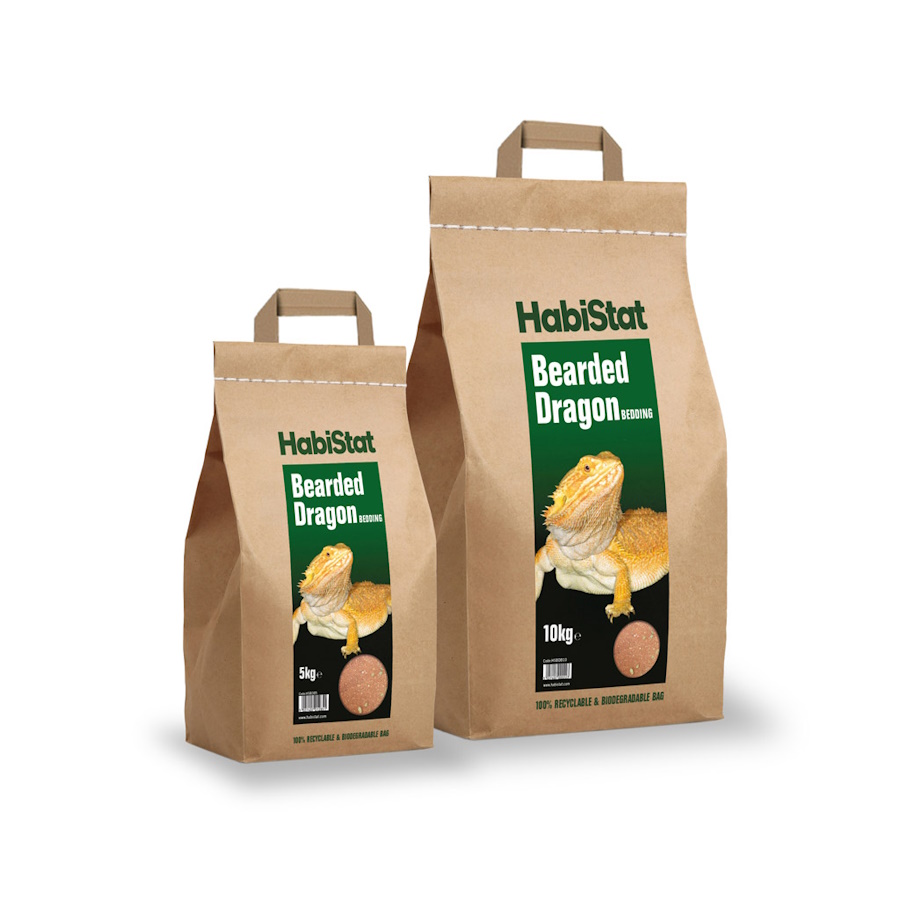
Species-specific substrates are designed to closely replicate the natural habitats of commonly kept species such as
Bearded Dragons, Leopard Geckos, and
Tortoises, helping keepers recreate appropriate environmental conditions.
At Living Art Ball Pythons we stock a wide range of substrates suitable for reptiles, amphibians, and invertebrates, helping you create safe, naturalistic environments for your animals.